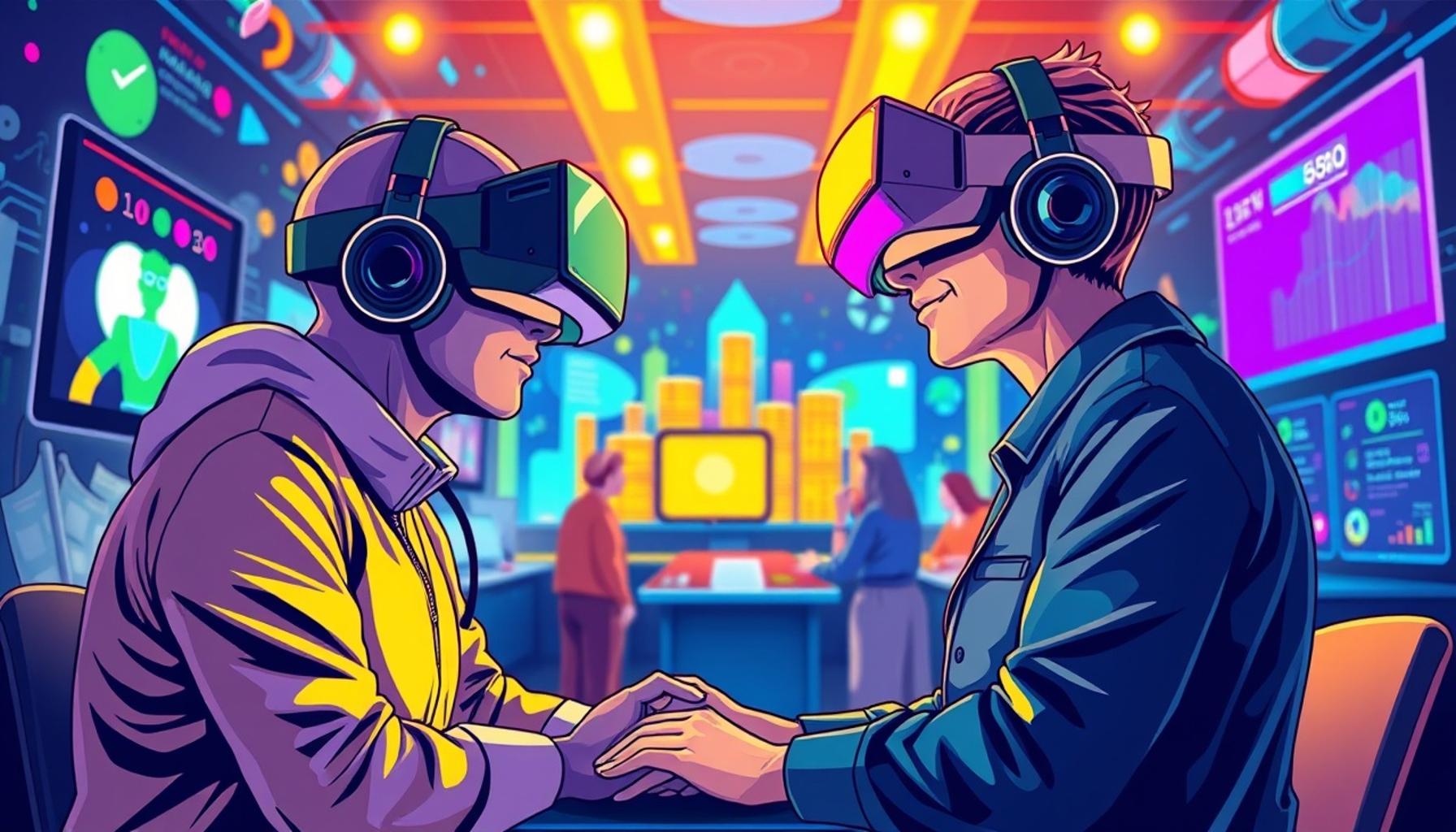
The Future of Work with Virtual Reality: Collaboration in Virtual Spaces

Understanding the Impact of Virtual Reality on Collaboration
The digital landscape is rapidly evolving, ushering in exciting opportunities for teams to collaborate and innovate. One of the most groundbreaking advancements in this realm is Virtual Reality (VR), which has the potential to completely transform how we work together in virtual spaces. As companies increasingly integrate this technology, understanding its implications for the future of work is crucial.
One of the most significant benefits of VR is its ability to create immersive environments that enhance team collaboration. These virtual spaces can make communication feel more organic and intuitive, resembling face-to-face interactions much more closely than traditional video calls or emails ever could. For instance, instead of merely talking over a screen, team members can use avatars to express body language and gestures, substantially improving the quality of their interactions.
Enhanced creativity is another key feature that makes VR appealing to organizations. Virtual environments can spark innovative thinking by transcending physical limitations. In a VR brainstorming session, for example, participants can visualize abstract concepts in a three-dimensional space, allowing for a greater exploration of ideas without the constraints of a physical room. Consider an architecture firm using VR to visualize building designs; team members can walk through a simulated version of a structure, offering feedback and fostering creative input that would be challenging in a standard conference room.
Moreover, remote accessibility is a tremendous asset of VR, facilitating the seamless collaboration of teams from diverse geographical locations. With the right technology, colleagues from different states or even countries can come together in a shared virtual space, enriching discussions with varied perspectives. This feature becomes especially relevant in a globalized economy where companies often employ talent from around the world. For example, a tech giant could hold a virtual meeting that includes team members from California, New York, and even overseas, ensuring a diverse range of insights and ideas.
Organizations are already leveraging VR in numerous ways to enhance interaction and learning. For instance, virtual training sessions allow employees to practice their skills in a simulated environment free from real-world repercussions. Healthcare professionals can conduct virtual surgeries to hone their skills without any risk to real patients. Similarly, companies can establish collaborative design workspaces where designers work on 3D models together in real-time, irrespective of their location, thereby streamlining the design process efficiently.
Furthermore, the advent of virtual conferences has revolutionized how professionals connect, network, and learn. These events allow participants to engage in interactive sessions that mimic in-person gatherings, complete with breakout rooms for discussions and panels. The ability to attend from anywhere not only increases accessibility but significantly reduces costs associated with travel and accommodation.
As technology advances, it is essential for businesses to embrace these innovative tools. The potential impacts of VR on the future of work are vast, ranging from improved training and efficient teamwork to groundbreaking approaches in creativity and networking. In the age of digital transformation, investing in VR is not just a trend but a strategic move that could define the next generation of collaborative endeavors.
DIVE DEEPER: Click here to learn more
Transforming Team Dynamics through Virtual Reality
As we delve deeper into the future of work, the way teams interact is undergoing a significant transformation thanks to Virtual Reality (VR). This immersive technology is not merely a novelty; it is poised to redefine traditional collaboration methods that businesses have utilized for decades. One of the core advantages of VR is its ability to create a shared sense of presence, allowing team members to feel as if they are in the same room, even when they are miles apart.
When teams convene in virtual spaces, they can engage in activities that mimic physical interactions, such as whiteboarding sessions, where ideas can be freely exchanged and visually mapped out. Instead of adhering to the limitations of standard video conferencing tools, which often lead to misunderstandings and miscommunication, VR allows participants to visualize their ideas collectively. This immersive collaboration can lead to higher levels of engagement and better outcomes, as individuals are more likely to contribute when they feel connected to their peers.
Consider the following aspects of VR that greatly enhance team collaboration:
- Interactive Simulations: Teams can simulate real-world scenarios that require collaborative problem-solving. For instance, a marketing team can engage in a virtual marketplace to strategize product launches or campaigns, testing their ideas in a dynamically changing environment.
- Real-time Collaboration: VR allows multiple team members to work together on the same project in real-time. Imagine designers collaborating on a 3D model simultaneously, making instant modifications based on feedback that is communicated through gestures and visual cues within the virtual space.
- Team Building Activities: VR can also facilitate team-building exercises that foster relationships and trust. Activities such as virtual escape rooms or collaborative puzzle-solving can help teams bond while simultaneously improving their problem-solving skills.
Furthermore, the social dynamics of VR can help address some inherent challenges of remote work. Often, remote employees experience feelings of isolation or disconnect from their teams. VR breaks down these barriers by providing a platform where users can interact and feel a sense of community. Engaging in regular virtual meetings or social gatherings can strengthen relationships among colleagues, which is vital for maintaining a cohesive work environment.
This emphasis on connection does not only promote productivity but also enhances employee well-being. As companies strive to create a culture of collaboration and support, using VR as a tool to foster social interactions can lead to improved job satisfaction and retention rates. For instance, a company that hosts weekly social VR meet-ups can create a culture where employees feel valued and engaged, significantly reducing turnover.
As businesses contemplate integrating VR into their operations, the potential benefits extend beyond collaboration alone. Embracing this technology sets a foundation for future innovations in the workplace, enabling organizations to adapt to evolving work models while keeping teams aligned and motivated.
DIVE DEEPER: Click here to uncover more
Enhancing Communication Through Immersive Experiences
While the collaborative potential of Virtual Reality (VR) is vast, one of the most transformative aspects is its ability to enhance communication among team members. Traditional methods of communication, such as emails and standard video calls, often fall short because they lack the visual and emotional cues that inform our interactions. VR fills this gap by providing an immersive environment where body language and facial expressions are not merely visible but also integral to the communication process.
In a VR setting, team members can use digital avatars that not only replicate their physical motions but also convey emotions through varied expressions. For example, during a heated brainstorming session, participants can sense when their peers are excited or skeptical based on their avatars’ movements and reactions. This real-time feedback can lead to a richer dialogue, where misunderstandings are minimized and ideas can be refined instantly. As a result, teams can reach decisions faster and with greater confidence.
Moreover, VR platforms foster an atmosphere of informal chats and spontaneous interactions that are often absent in the traditional remote work setup. Just as colleagues might engage in light banter by the water cooler, VR enables similar casual encounters in virtual environments. These informal exchanges can lead to unexpected innovations as team members share ideas or seek advice within an authentic, less formal context.
Training and Development in Virtual Environments
Beyond collaboration and communication, VR stands out as an exceptional tool for training and development. Organizations can leverage immersive experiences to conduct comprehensive training programs that are both interactive and engaging. For instance, an engineering firm can recreate a construction site in VR, allowing new hires to navigate the environment safely and learn the intricacies of the job before they step onto a physical site.
This type of experiential learning not only enhances knowledge retention but also builds confidence among employees. Studies show that individuals who undergo training in simulated environments are better prepared for real-world situations. By incorporating VR training modules, businesses can ensure that their teams are highly skilled and ready to tackle the challenges that lie ahead.
Cost-Efficiency and Scalability
Implementing VR in the workplace also carries significant advantages in terms of cost-efficiency and scalability. For organizations that rely on global teams, the costs associated with travel and physical meetings can be substantial. By utilizing VR for meetings and collaborations, companies can drastically reduce these expenses while still facilitating meaningful interactions. For example, a multinational company can host its annual strategy meeting in a virtual auditorium, enabling team leaders from various countries to present their insights without incurring travel costs.
Scalability is another crucial benefit of VR integration. As a business expands, onboarding new employees can be a logistically challenging endeavor. However, with VR, new hires can be greeted and trained in an immersive virtual space that replicates the company’s culture and work processes. This approach not only simplifies the onboarding process but also instills a sense of belonging and alignment with organizational values from the outset.
In essence, VR offers unprecedented opportunities for enhancing collaboration, communication, training, and cost management, paving the way for a future where virtual spaces become an integral part of the modern workplace. By embracing such technological advancements, organizations can promote creativity, inclusivity, and operational efficiency like never before.
DISCOVER MORE: Click here to learn about AI and your data privacy
Looking Ahead: Embracing the Virtual Workplace Revolution
The integration of Virtual Reality (VR) into the workplace is not just a passing trend; it represents a profound shift in how we approach collaboration, training, and organizational culture. As we navigate this exciting frontier, it’s clear that VR’s ability to enhance communication and connection among team members will be revolutionary. With digital avatars that convey real emotions and reactions, team interactions can become truly dynamic, fostering an environment where ideas can flow freely and misunderstandings are minimized.
Moreover, the advantages of VR extend beyond collaboration. Organizations can create engaging and effective training programs, allowing employees to learn in safe and controlled virtual environments. This interactive learning can lead to greater knowledge retention and better preparedness for real-world challenges. Additionally, the cost savings and scalability provided by VR make it a logical choice for businesses aiming to optimize resources and streamline workforce development.
As we look to the future, businesses that embrace VR will likely find themselves at the forefront of innovation and productivity. However, it is essential to approach this technology with a clear strategy, ensuring that it aligns with the company’s culture and goals. By doing so, organizations can harness the full potential of virtual collaboration, creating a work environment that is not only efficient but also inclusive and engaging for all employees.
In conclusion, the future of work is poised to be markedly different, shaped by the capabilities of virtual environments. By investing in VR technology, companies can cultivate a collaborative culture that will drive success in a rapidly evolving business landscape.

Linda Carter
Linda Carter is a writer and expert known for producing clear, engaging, and easy-to-understand content. With solid experience guiding people in achieving their goals, she shares valuable insights and practical guidance. Her mission is to support readers in making informed choices and achieving significant progress.